For a multi-door project, acceptance is not complete because a lock lights up and opens once. Door conditions, mechanical movement, product version, network setup, permission handover and fault records together determine the operating cost after the installer leaves. This checklist helps purchasers, integrators and property teams turn those checks into an auditable handover process.
1. Freeze the acceptance scope before installation
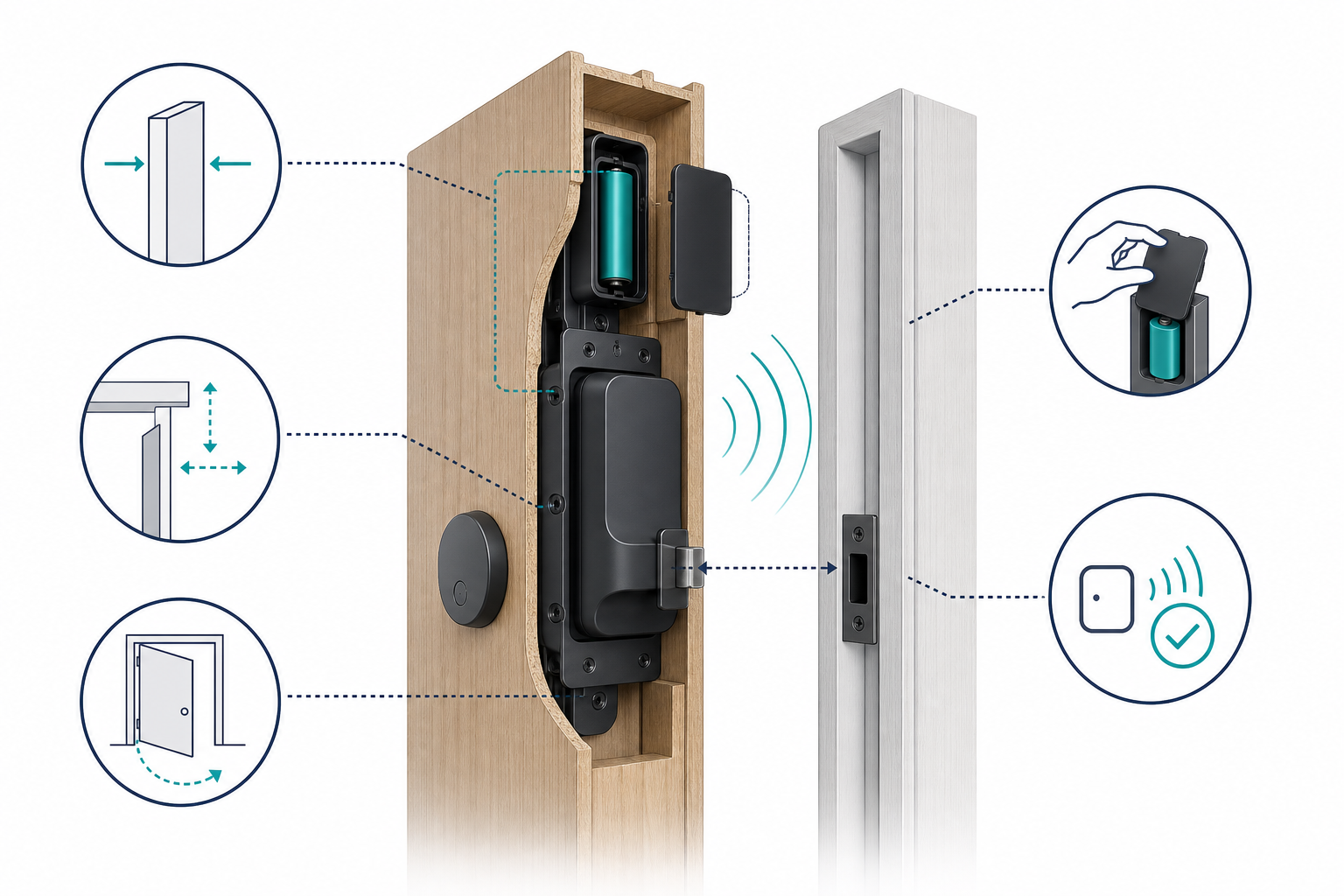
Before installation begins, align the lock model, mortise specification, handing, door thickness, frame condition, connectivity, access roles and emergency-opening method in one installation confirmation sheet. Without a common baseline, different door types and product revisions can be mixed on site, making later faults difficult to isolate.
Use a representative door survey before the installation day. The survey should capture door ID, type, handing, thickness, drilling, clearance, multipoint hardware and photos. Exceptions should remain on a controlled list until the team agrees whether to change the door, select a different mortise or revise the installation method.
| Acceptance object | Evidence to record | Release condition |
|---|---|---|
| Door and preparation | Thickness, handing, drilling, gap, strike plate | Dimensions and closing resistance meet the approved sample |
| Lock configuration | Model, mortise, panel, firmware and serial number | Matches the project BOM and approved version |
| Connectivity and access | Communication method, gateway, administrator and logs | Can be verified, handed over and revoked |
| Emergency access | Mechanical key, external power and instructions | Site team has seen and recorded the procedure |
2. Verify door fit and mechanics before asking the motor to compensate
A latch that does not align with the strike, an incorrect spindle length, a sagging leaf or excessive multipoint resistance can present as intermittent unlocking, fast battery drain or abnormal motor sound. These conditions should not be treated as firmware problems first. Check handle return, latch travel and closing force manually before electrical commissioning, then repeat opening and locking tests in the real door position.
- Gap and strike: the latch must not be forced against the frame when the door closes.
- Spindle and handle: length, position and return action must match the mortise without rubbing the housing.
- Mortise and fasteners: confirm screws do not load the transmission and deadbolt actions remain free.
- Repeated cycles: test lock, unlock and privacy functions repeatedly, then record retries or noise.
3. Commission functions, network and permissions through real user paths
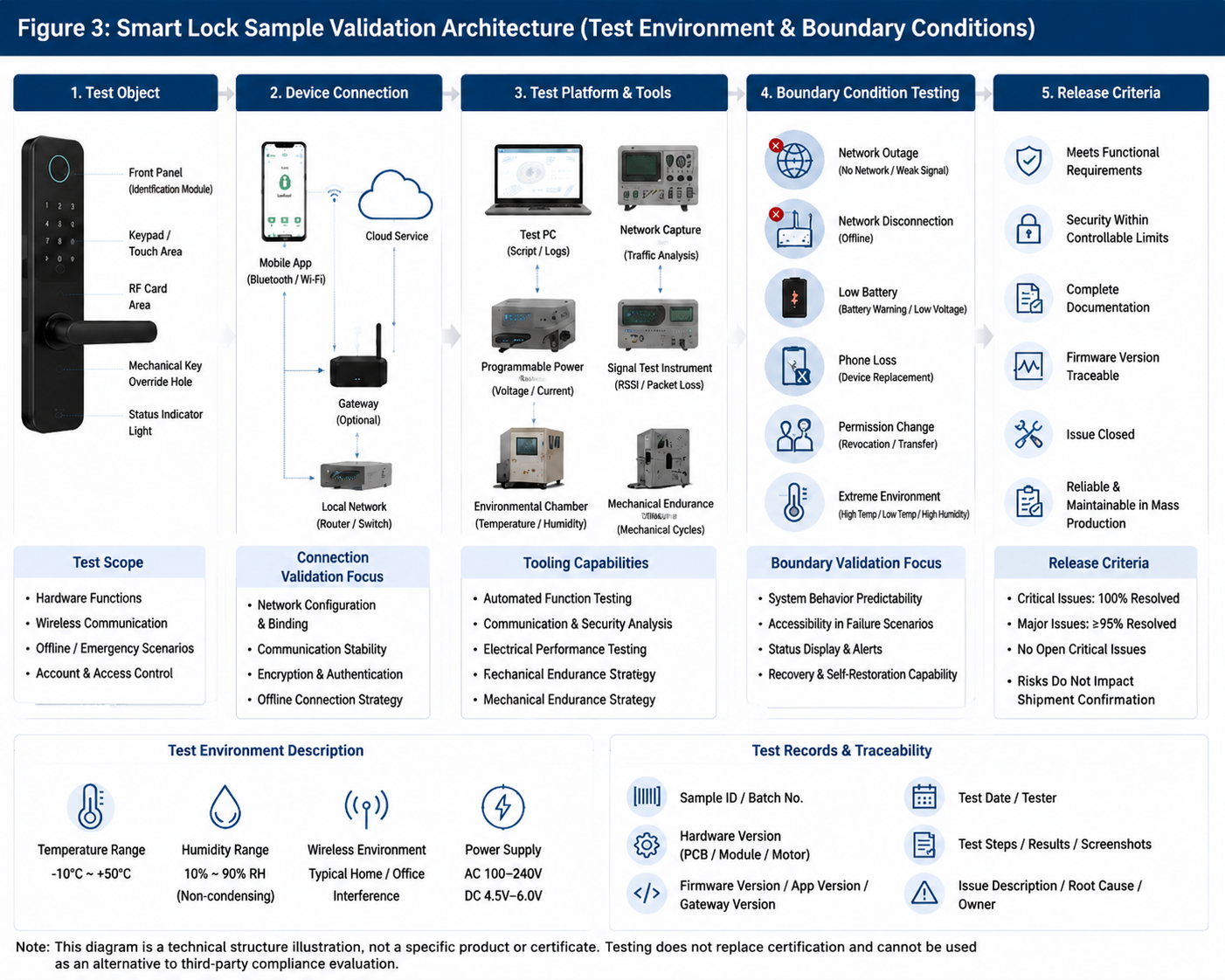
Networked lock acceptance must cover more than whether the device connects once. Test local unlocking, authorised remote access, offline behaviour, low-battery notices, administrator transfer and factory reset. For apartment, hotel and office projects, confirm that the operating team sees the correct door identity, status and escalation route. Any third-party interface must be accepted against the actual project version and documented delivery scope.
Split commissioning into two rounds: installers verify mechanical action and basic connectivity; the property or operations team verifies roles, records and accounts. This keeps physical installation faults separate from system issues and avoids leaving test accounts active in a live project.
4. Close repeated issues with data, not repeated individual rework
When similar symptoms occur across rooms, do not rework one lock at a time without evidence. Create a fault record with lock ID, building and floor, installer, door condition, product lot, firmware version, time and photo or video. When the agreed project attention threshold is reached, the purchaser should request a joint decision on containment, sampling and corrective action.
Separate single-door mechanical deviations from assembly issues and from a shared batch, software or configuration cause. An unverified temporary fix should not be replicated through the site. The same traceable record also makes it easier to use the supplier's after-sales support process if parts, firmware or RMA investigation becomes necessary.
5. Hand over records and maintenance ownership
The final handover package should include a lock list, serial-number-to-location map, administrator transfer record, emergency-opening procedure, installation and maintenance instructions, and a list of open or closed exceptions. For long-term operations, confirm battery replacement, firmware-update, spare-parts and RMA contacts at the same time.
Handover should not depend on a single project contact. Agree who retains emergency access, receives low-battery or offline alerts, can revoke departed users and performs the first-month follow-up. For multi-building projects, record the contacts, response expectations and escalation path so site issues do not move repeatedly between purchasing, installation and property teams.
Request a project installation acceptance checklist
Tell us the lock type, door quantity, door construction, target market, communication method and current installation concern. WAFU can help structure a project discussion checklist; the final solution must be validated with the sample, door conditions and contract scope.
FAQ
Why inspect the door before commissioning a smart lock?
Door gap, latch alignment, spindle length and door deformation directly affect motor load, unlocking reliability and battery use. Check them before network commissioning.
How should repeated faults be managed in a bulk lock project?
Record lock ID, location, batch, firmware version, installation condition and symptoms, then apply the agreed process for retest, containment and joint analysis.