This article is a B2B evaluation framework, not a certification, quality guarantee or legal advice. Release criteria, market requirements and contractual responsibilities must be agreed for each project.
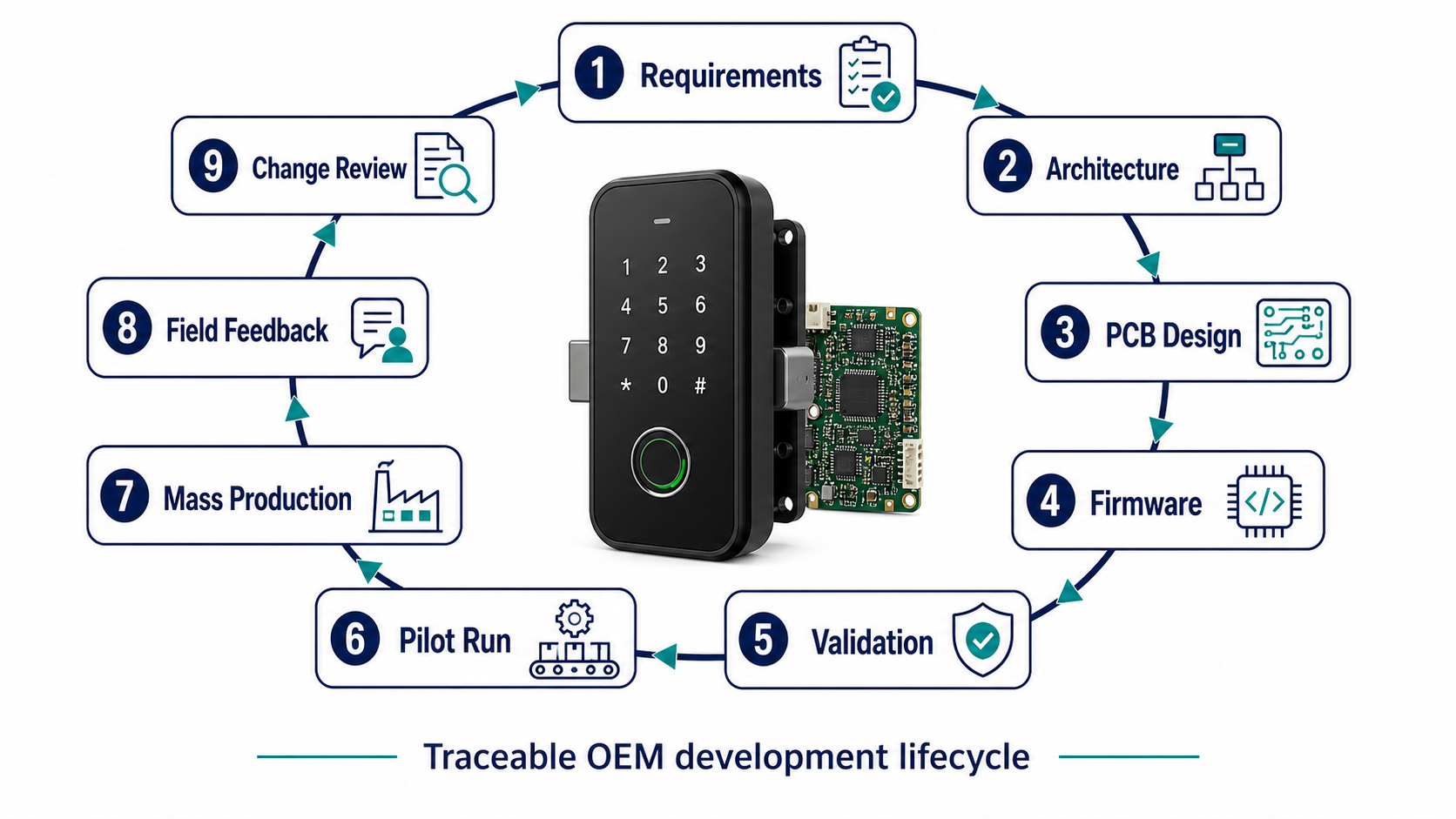
A smart lock sample is not merely a visual reference. It is the moment to freeze what will be produced, tested, installed and supported: the lock body, PCB, firmware, accessories, app or gateway interface, packaging and documentation. A structured approval and change-control process helps buyers prevent a “same model” becoming a different product between sample, pilot run and mass production.
1. Treat the approved sample as a controlled baseline
Before release, name the exact approved configuration rather than referring only to a model. The approval record should identify the exterior, lock body, motor, PCB revision, firmware version, enrolled credential method, connectivity configuration, power arrangement, packaging and applicable documents. It should also state which buyer, OEM and project representatives may approve a deviation.
For projects with multiple door types, make the baseline door-specific. A lock that works on one mock-up may need a different mortise, spindle, strike or installation method on another door. The project installation acceptance checklist explains how those door conditions should be carried into on-site commissioning.
2. Validate the sample under project conditions, not only on a bench
Review the approved sample against the expected door construction, opening direction, mechanical load, environment, access frequency and network conditions. Record the test method and conditions so later comparisons are meaningful. A successful showroom unlock does not demonstrate the same behaviour after installation, user enrolment, power cycling or weak network conditions.
| Review area | What the approval record should show |
|---|---|
| Mechanical fit | Door thickness, handing, drilling, mortise, spindle, strike and repeated operating checks |
| Electrical and power | Battery or supply arrangement, low-power behaviour, emergency-power procedure and test conditions |
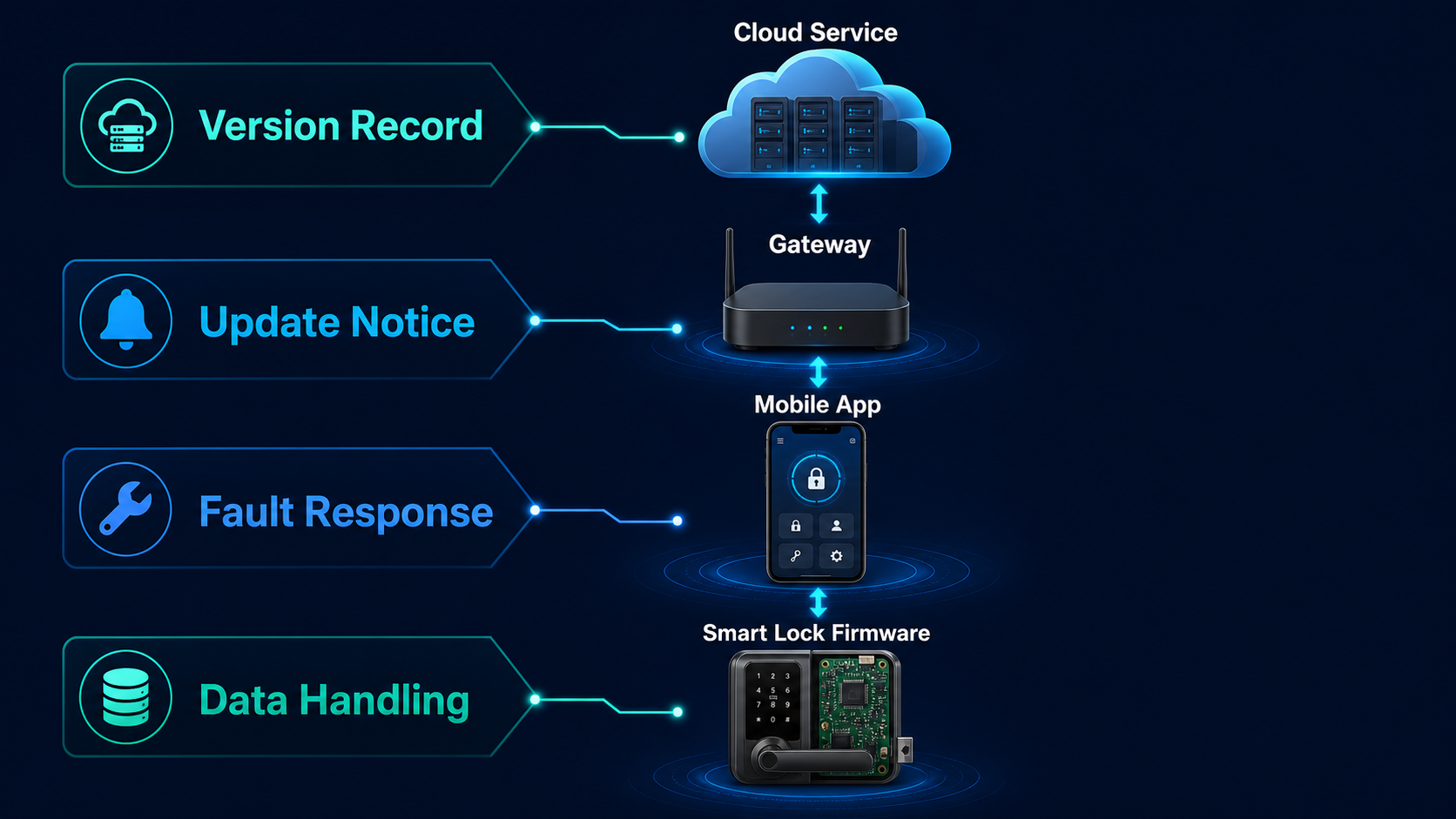
| Connected functions | Firmware, app, gateway or cloud versions, permissions and offline behaviour |
| Visual and packaging | Finish reference, accessories, labels, manuals and market-specific markings |
3. Control BOM and version records
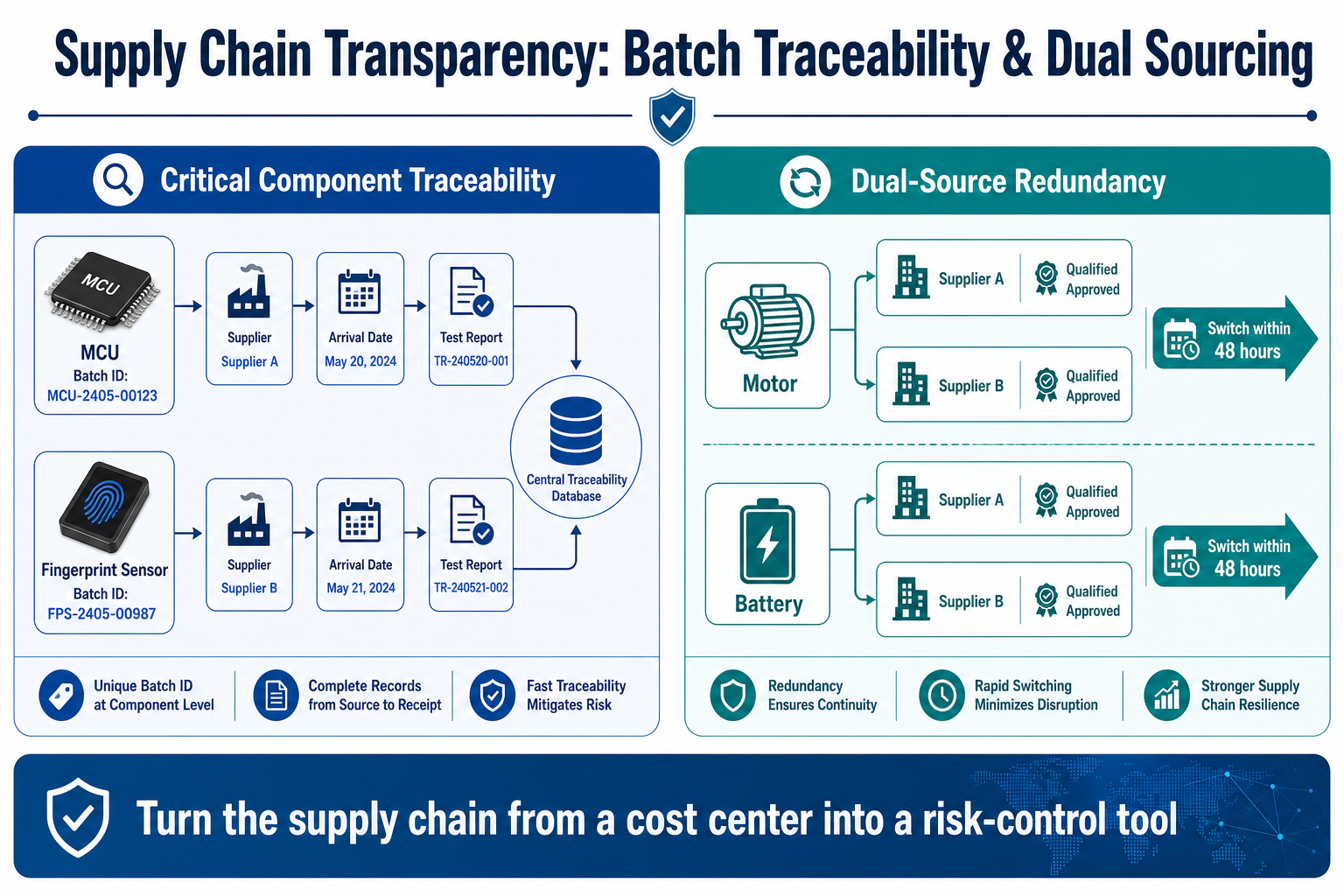
Purchasing teams should request a controlled BOM or approved-component list for components that affect fit, function, reliability, compliance or service. That normally includes the lock body, motor, PCB, key sensors, battery contacts, wireless module and critical accessories. A version record should link each change to a reason, evaluation, approval, effective lot and verification result.
This record complements a factory review. Use the smart lock factory audit guide to check whether supplier production records and version controls can support the agreed approval process.
4. Handle engineering changes through review, approval and verification
Not every production adjustment is equal. A cosmetic packaging correction is different from a new motor supplier, PCB revision, firmware update or lock-body change. For any material change, agree who receives the request, what evidence is required, which sample or pilot test is needed, who approves it and from which lot it becomes effective.
- Change request: describe the affected part, version, reason, risk and proposed effective date.
- Impact review: assess fit, operation, security, certification, documentation, inventory and service parts.
- Approval and verification: retain approval evidence, validation results and the first effective production lot.
- Communication: update the buyer, installation team and after-sales contact before mixed versions reach the field.
5. Use pilot runs to prove repeatability before mass production
A pilot run helps distinguish a successful engineering sample from a reproducible production process. Inspect representative units from the intended process, document their serial numbers and versions, and compare them to the approved baseline. Where the product is connected, test the update and recovery path as well as the nominal function.
The release package should provide a clear hand-off to production and service. The OEM after-sales support checklist helps teams define how version records, spares, firmware and RMA information remain available after delivery.
6. Questions to ask before mass-production release
Can every approved sample be identified by its lock body, PCB, firmware, accessory and packaging versions?
Request a record that connects the approved configuration to a serial number or controlled sample ID and the relevant BOM and test evidence.
Which changes require buyer approval, and which may be handled under the supplier's internal process?
Set the boundary in writing. Changes that affect fit, core function, safety, connectivity, compliance, finish or serviceability should not be left ambiguous.
How will the project identify the first production lot using an approved change?
Agree the lot, date or serial-number range and ensure the installation and service teams can recognize it.
What is needed when a firmware, app, gateway or cloud dependency changes?
Define version compatibility, test evidence, user impact, update responsibility, rollback route and customer communication.
Request an OEM sample-approval checklist
Tell us the lock type, target market, door application, expected order volume and current sample or change-control concern. WAFU can help structure a project discussion checklist; final specifications must be confirmed through the agreed sample and contract documents.