This article is for engineering procurement, channel brands, and OEM/ODM project teams. Specs here support early technical discussions; door fit, certification scope, optional modules, and lead times must be confirmed by sample approval and formal quotation.
The value of an invisible lock is more than “hiding the lock.” For project buyers, the first answers needed are: door conditions, required redundancy, and delivery configuration. WF-019 fits projects that need a simple remote-control solution; WF-026 targets applications that demand dual-system dual-motor design, a Grade C cylinder, and multi-method unlocking. This guide provides an engineering selection method you can put on an RFQ.
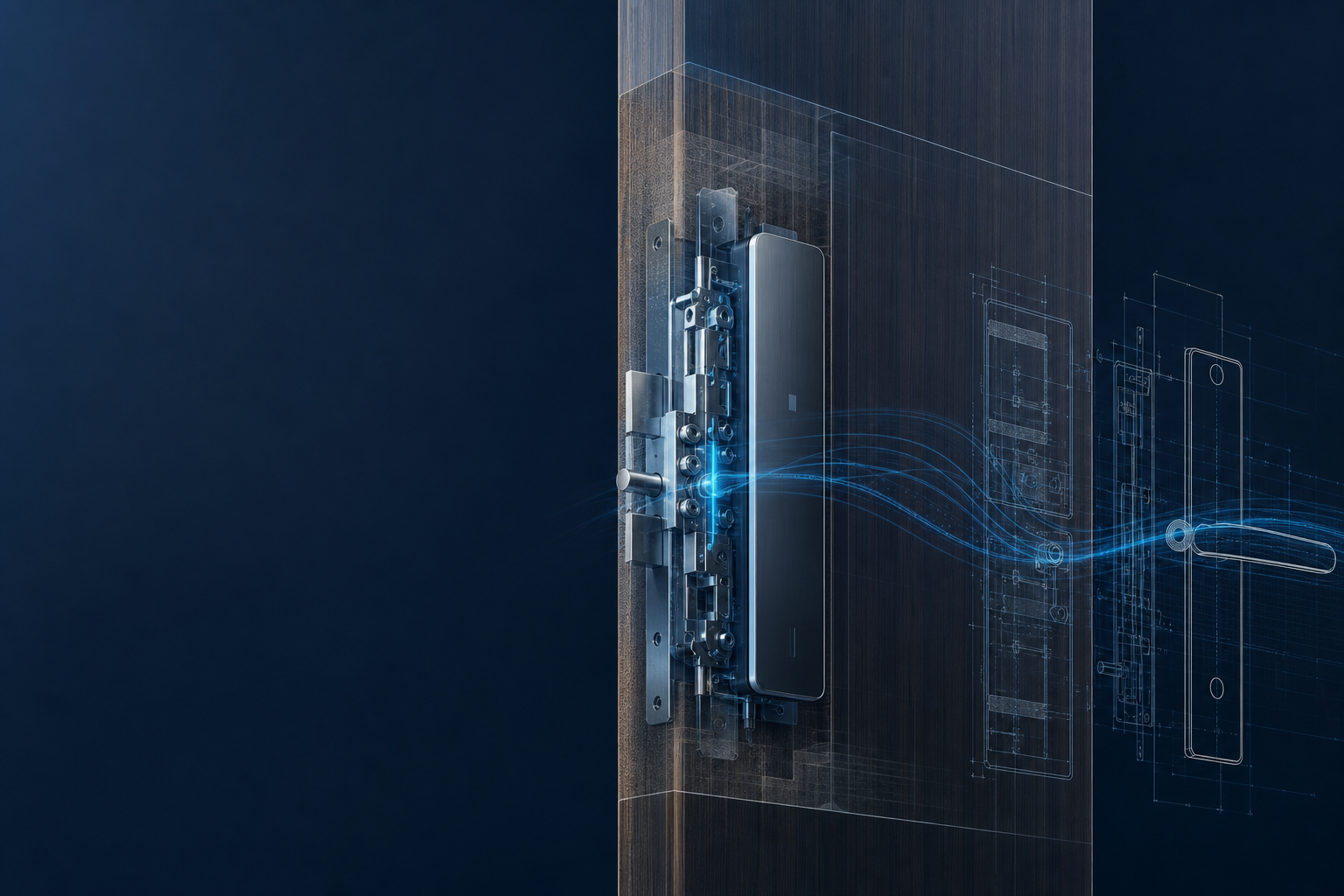
Define project positioning before counting features
Both products follow the invisible remote-lock path, but their design goals differ. WF-019 uses 2 AA batteries and 433 MHz remote control with a nominal range of 10 meters. It suits residential, apartment, and channel SKUs that prioritize low deployment complexity, concealed installation, and basic remote control. If the project needs fingerprint, PIN, NFC, App, Bluetooth, or Wi-Fi, treat those as optional modules at the RFQ stage—not as default standard configuration.
WF-026 uses a dual-system dual-motor architecture, a Grade C cylinder, 4 AA plus 3 AAA batteries, and a 433 MHz remote range of 20 meters. It fits projects with clear requirements for redundancy, security structure, and multi-method unlocking. Selection is not “more complex is better”—it is matching lock capability to the target scenario and after-sales capacity.
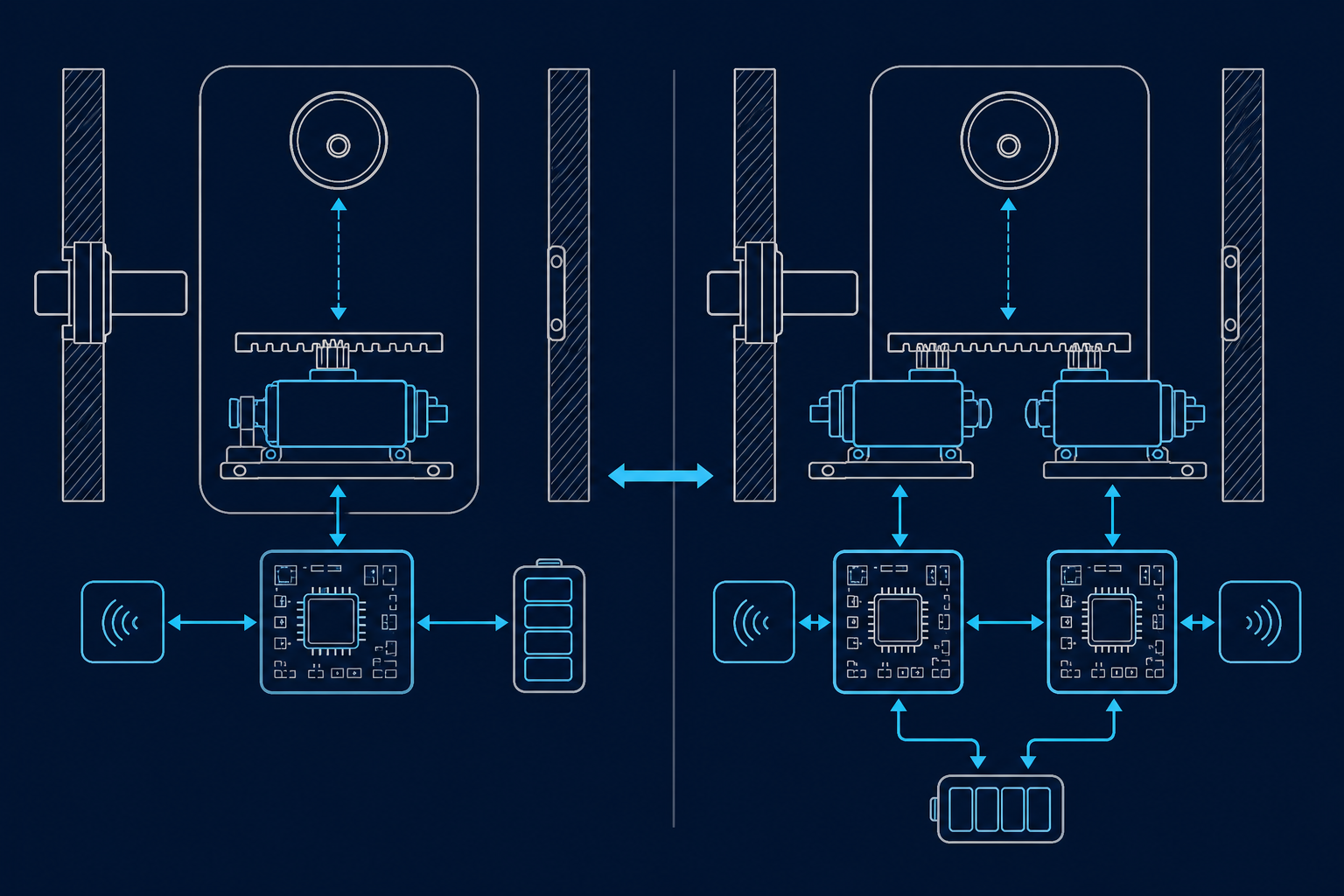
Engineering differences: single system vs dual-system dual-motor
WF-019: Make a basic invisible solution easy to deploy
When the project focuses on concealed installation, remote operation, and a clear product structure, WF-019 offers a more direct path. Engineering teams should prioritize available in-door space, mounting-plate fixation, remote quantity for delivery, and battery maintenance process. For multi-unit or retail channels, standardizing these basics usually reduces later communication cost more than adding unvalidated features.
WF-026: Leave headroom for higher redundancy and security
Dual-system dual-motor design fits when continuous availability and security structure are higher priorities. Procurement documents should specify required unlock methods, cylinder requirements, backup entry methods, and battery-replacement responsibility. Write these into sample acceptance criteria so “redundancy” becomes a verifiable delivery condition—not only a product claim.
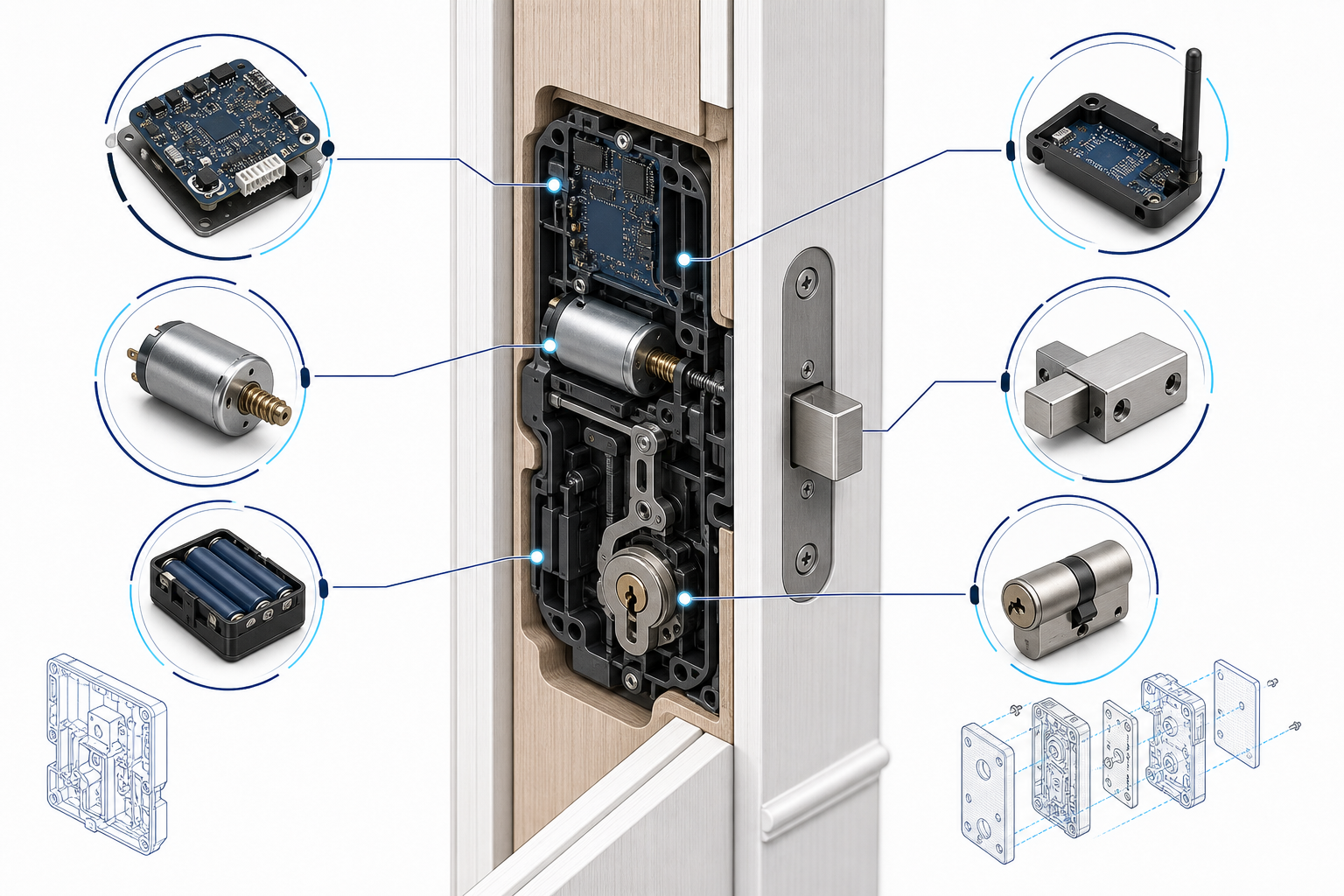
Door type, installation, and power checks
Invisible locks mount inside the door, so installation review cannot stop at appearance. Before sampling, provide door thickness, cavity size, frame clearance, door material, opening direction, and latch position. For retrofit projects, also confirm whether milling is allowed, mounting-plate load points, and later access to the battery compartment.
- Mechanical conditions: Provide door drawings or photos; confirm interference risk among lock body, mounting plate, and latch.
- Wireless conditions: Validate remote response on the actual door material and distance; metal doors or complex partitions need sample testing first.
- Maintenance conditions: Define battery check cycles, low-battery alerts, and emergency procedures for site staff.
- Export conditions: Align certification, packaging labels, and manual languages with the target market and confirmed product version.
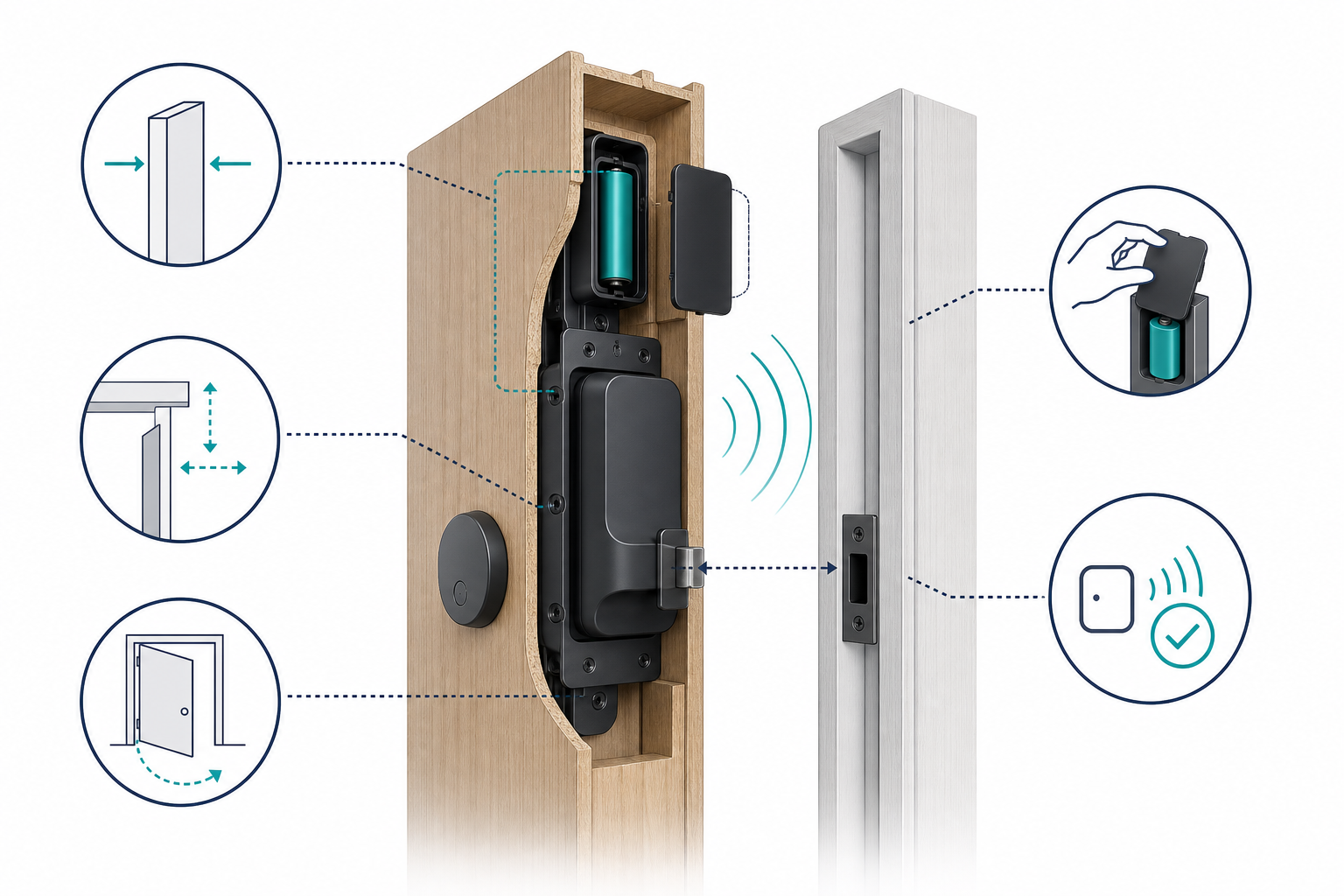
Four procurement questions for fast selection
1. Does the project explicitly require dual-system dual-motor and a Grade C cylinder?
If the requirement file or use case demands higher structural redundancy and cylinder configuration, prioritize WF-026. If the goal is reliable basic invisible remote control, start with WF-019 sample validation.
2. Which unlock methods are needed—and are they standard or optional?
Do not treat “supported” as a buying decision. Confirm version, delivery scope, and test method for remote, fingerprint, PIN, NFC, and App item by item. Especially for WF-019, expanded unlock methods should be stated as optional modules.
3. Has remote range been validated on the real door type and site?
Nominal 433 MHz ranges—10 m for WF-019 and 20 m for WF-026—are selection starting points. Effective range still depends on door material, partitions, and site interference. Complete sample testing on the target door before volume orders.
4. Can the project team carry the matching maintenance process?
More features and complexity need clearer installation, acceptance, and after-sales instructions. Put battery, remotes, emergency unlock, and fault feedback ownership into the project delivery checklist to avoid later responsibility gaps.
OEM/ODM project delivery checklist
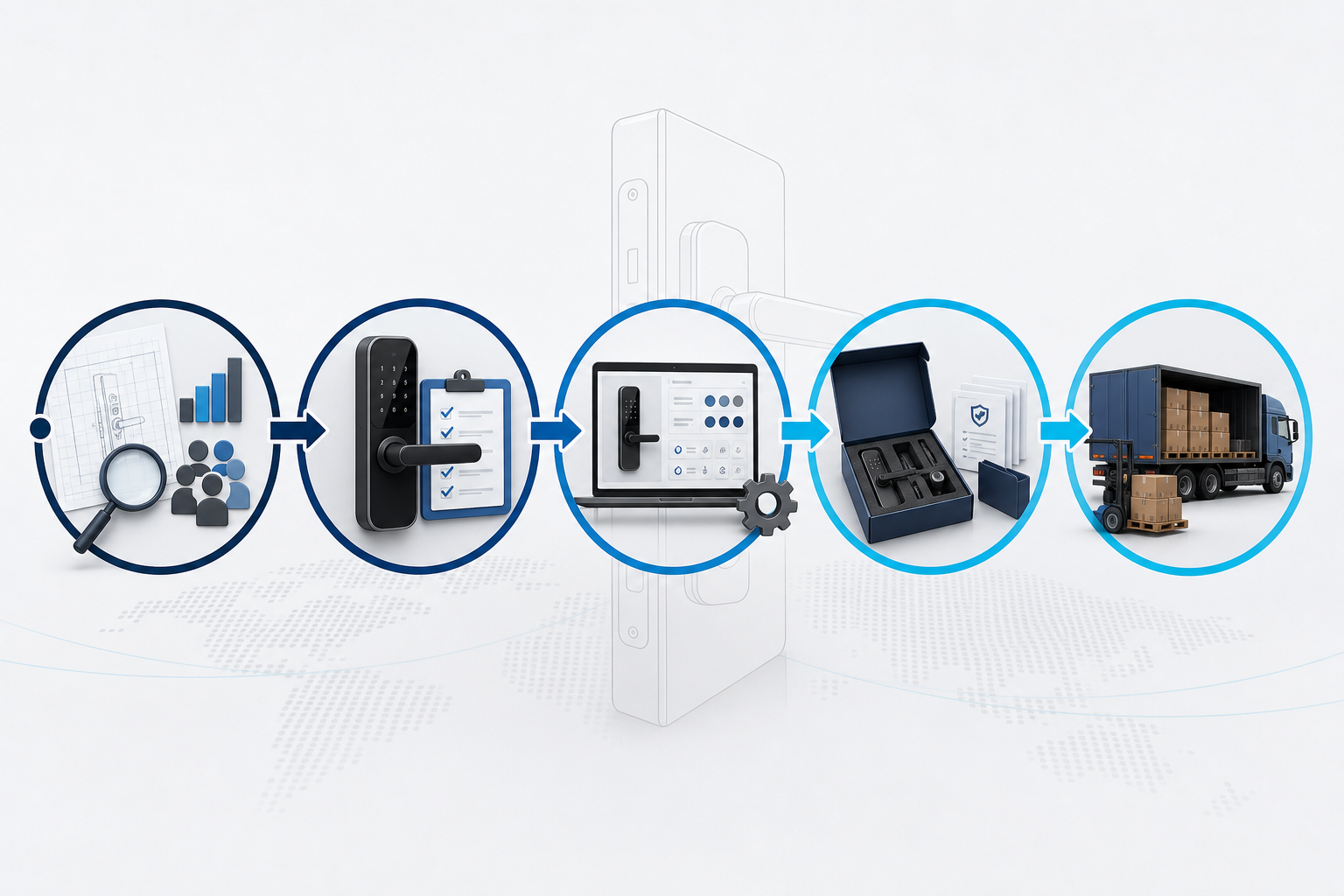
For brand owners, selecting a model is only the start. Align the following with quotation, samples, and mass-production documents:
- Target market, sales channel, and expected shipment volume;
- Door data, installation method, and on-site sample test plan;
- Clear list of standard configuration vs optional modules;
- Acceptance criteria for remote range, unlock methods, battery, and emergency operation;
- Certification, packaging, manual language, brand marks, and after-sales materials.
Ready to select an invisible lock solution for your project?
Share your door type, market, and required unlock methods with WAFU. We will help confirm a sample validation path for WF-019, WF-026, or a custom OEM/ODM configuration.