Learn how to verify smart lock supplier claims against actual models, configurations, supporting documents, and target-market requirements with a practical evidence matrix.
1. Decision Boundary
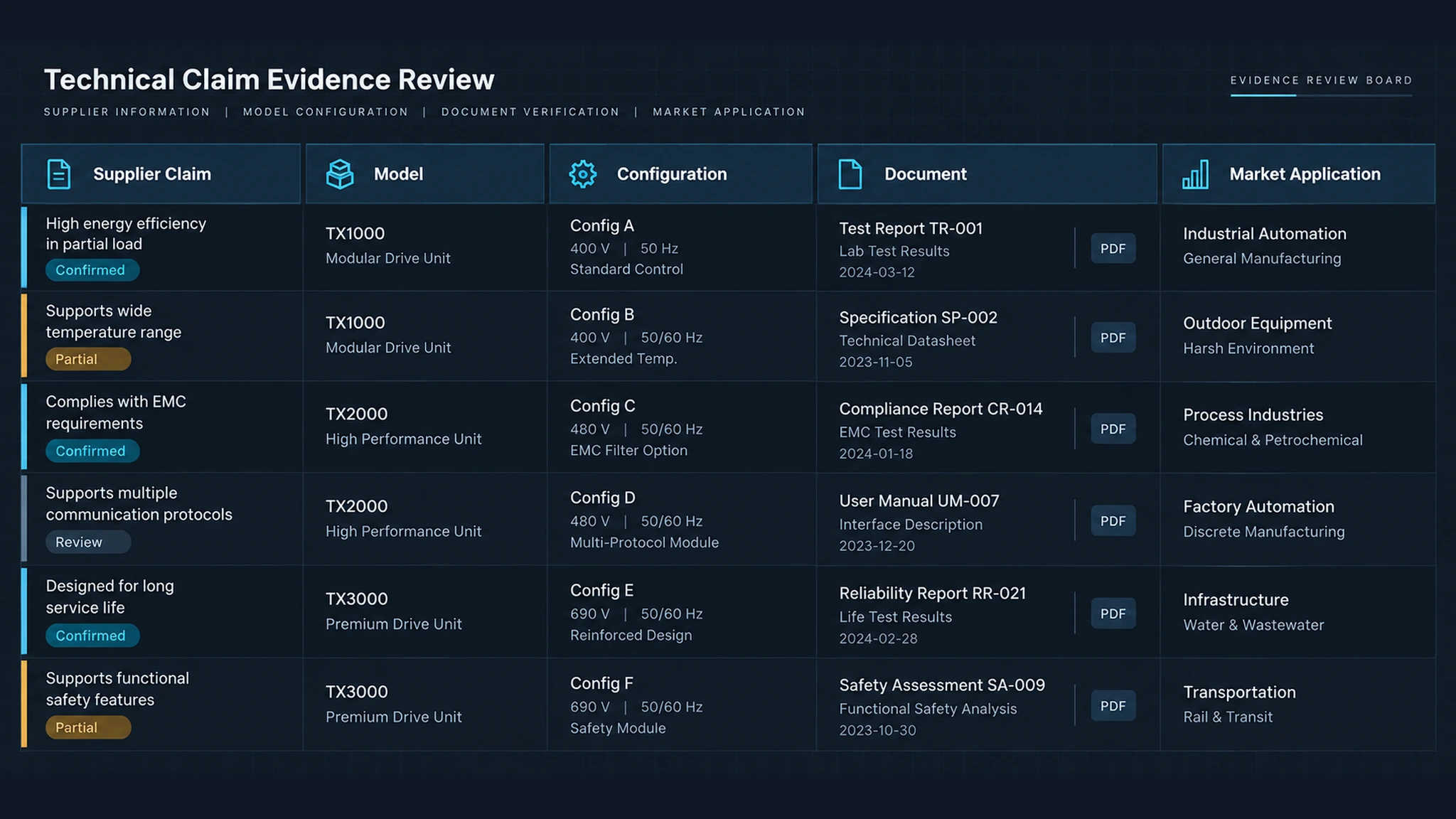
A supplier statement is not automatically a verified product fact. Define the exact claim and the evidence needed to support it. The verification boundary connects the written supplier claim, the specific model, the hardware or software configuration and version, the supporting document, and the target market or application.
This prevents general language from being treated as proof for every model or installation. Mark each record as confirmed, partially confirmed, unconfirmed, or not applicable. The objective is to show what can be relied upon, under which conditions, and with which limitations.
2. Claim to Model
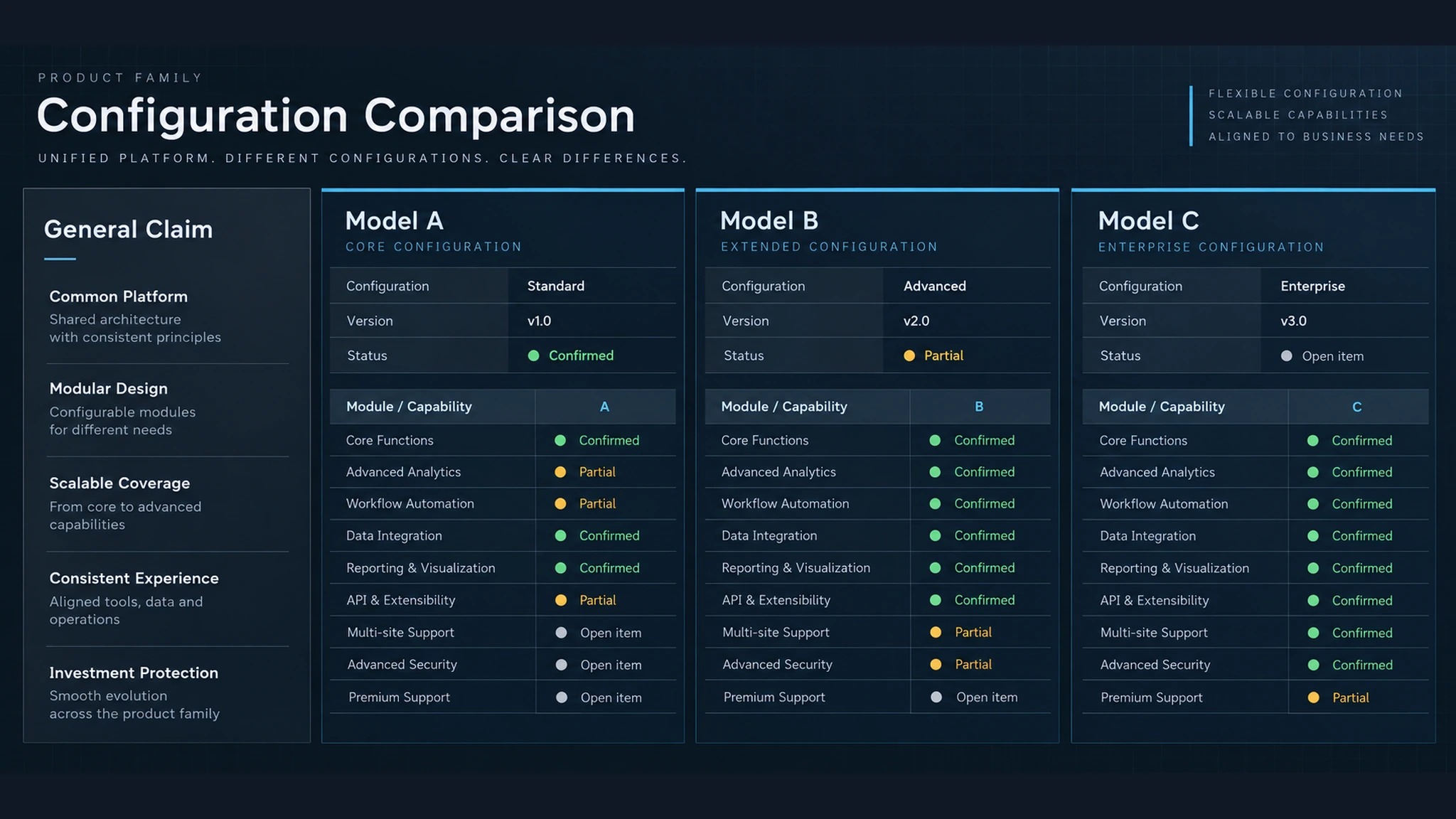
Every material claim should be mapped to an identifiable model or model family. Record the original wording, source, model number, hardware revision, firmware or software version, included functions, and stated exclusions.
A statement about mobile access, for example, may depend on a particular reader, gateway, firmware version, application, or management platform. Separate functions that are standard, functions available only with a defined configuration, and statements not yet tied to a model. Only the first two are model-level evidence, and conditional evidence must retain its conditions.
3. Configuration Baseline
A model name alone is rarely sufficient. Establish a baseline covering the lock body and door type, credential technology, mechanical interface, power and operating conditions, communication method, gateway or controller dependency, firmware, application, management platform, accessories, and installation constraints.
Record what is confirmed, proposed, or still requires written clarification. If a function depends on an accessory or software service, record that dependency. Evidence is version-aware: a document for one revision cannot silently support another revision.
4. Document Scope
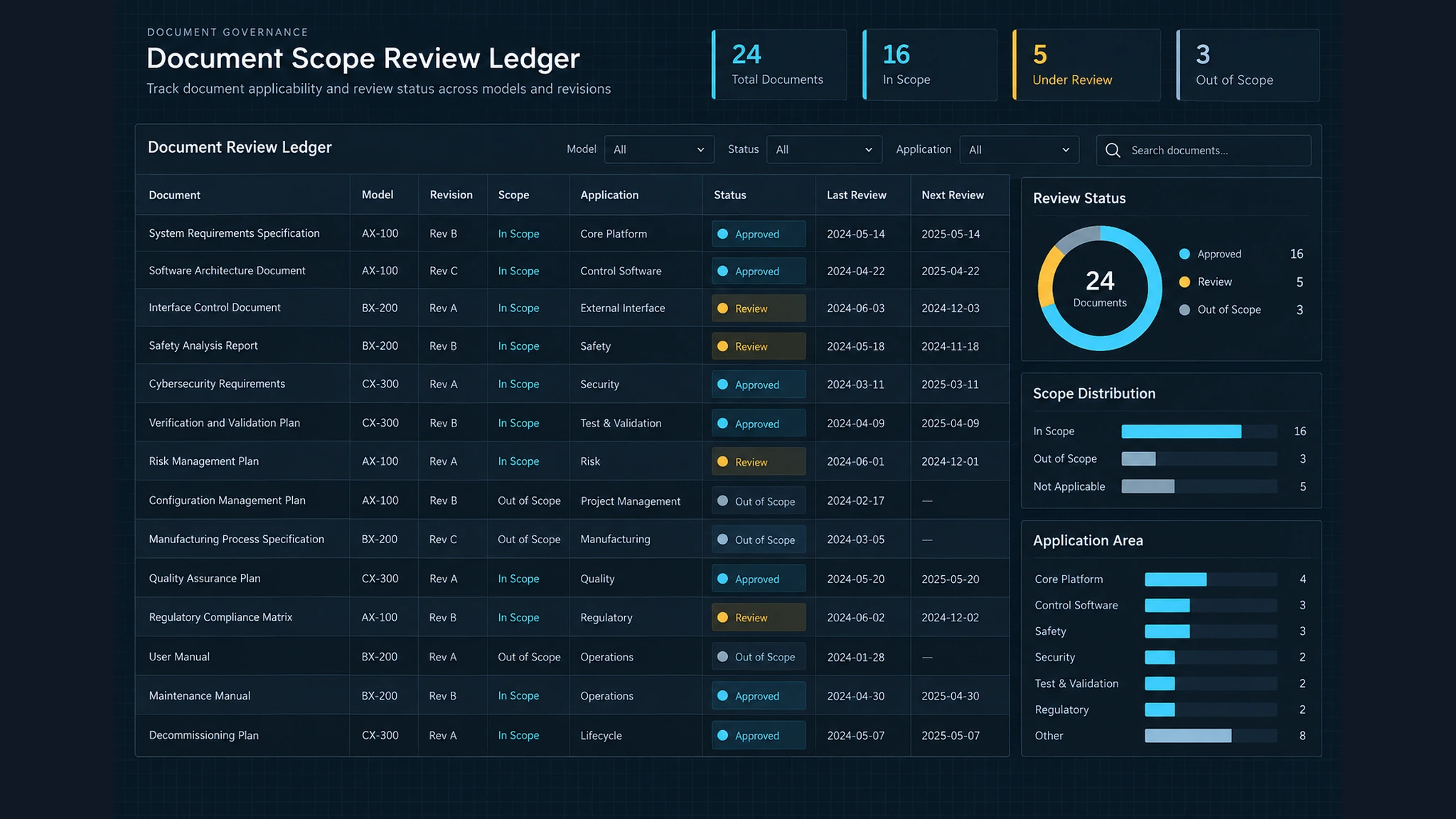
Evidence is useful only when its scope matches the claim. For each document, record its title, identifier, issuing organization, issue date, revision, referenced model or configuration, covered requirement, conditions, geographic scope, and replacement or expiry information.
A brochure, manual, integration record, and test document answer different questions. A document without a model reference, or a model reference without the relevant configuration, is incomplete. Missing conditions should remain open items rather than being inferred.
5. Market Application
The same technical function may require different evaluation in different applications. Define building type, door conditions, credential workflow, integrations, network or offline operation, local documentation needs, market requirements, and installation or support assumptions.
Describe requirements without making an unverified compliance promise. Where confirmation from a local authority, test body, platform owner, or project consultant is needed, record it as an open verification item. Market fit is a relationship between a defined application and a verified configuration.
6. Change Control
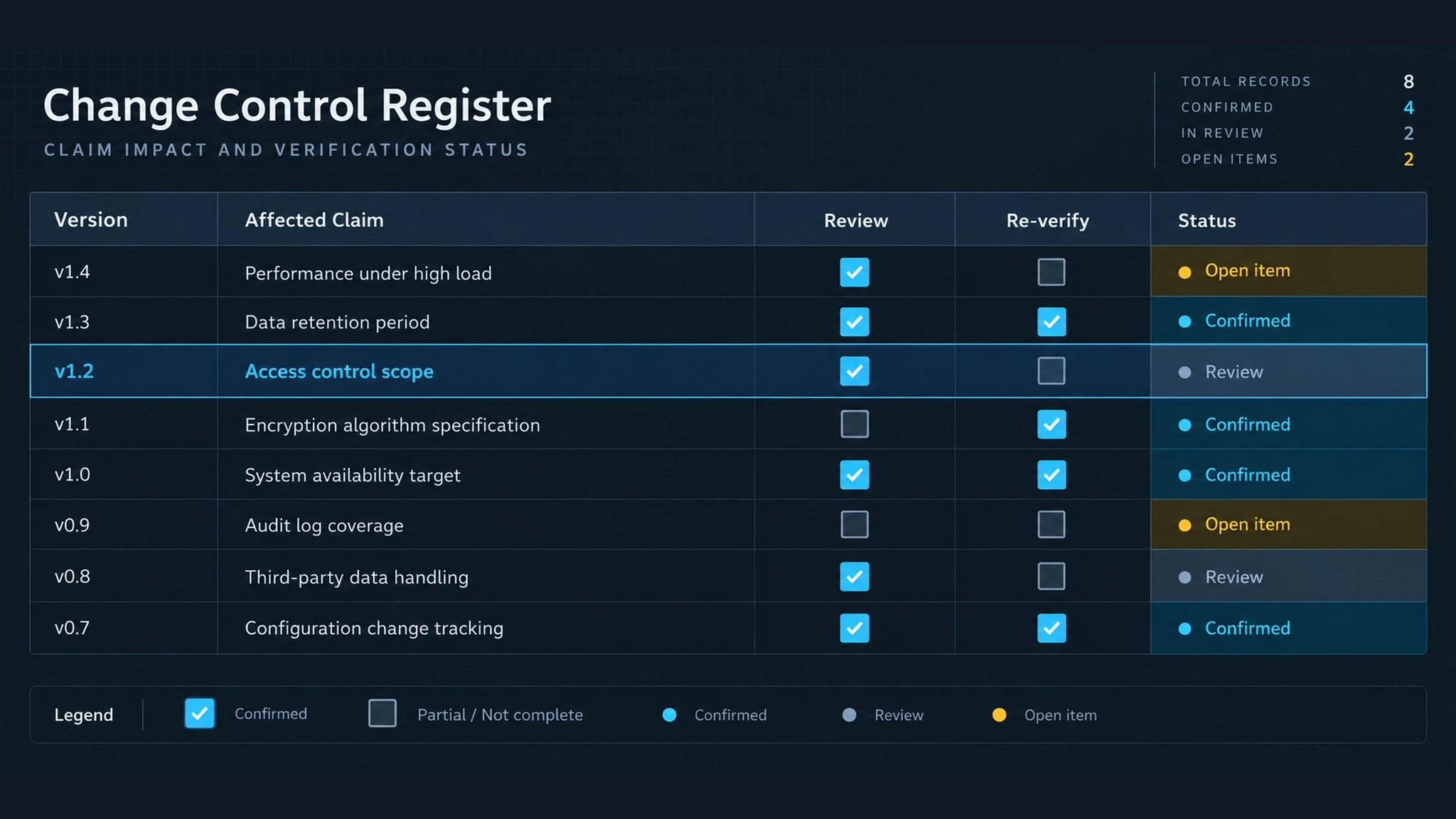
Review the matrix when the model, hardware revision, reader, gateway, accessory, firmware, management software, supporting document, installation environment, application, or market requirement changes. Also review it when an open item receives new evidence.
Record the date, changed item, previous and new state, affected claims, and required re-verification. Keep previous evidence references so the decision history remains clear. The purpose is to identify affected claims instead of carrying evidence forward without checking its scope.
Before approval, also confirm that the source actually covers the claimed function, that accessory and platform dependencies are included in the quotation, that installation conditions match the target project, and that a responsible party is named for every open clarification. When an item changes, re-evaluate the affected rows and market assumptions rather than simply replacing the file.
7. Evidence Matrix
Use one row per material claim or requirement:
For a complete review, each row should also record the original claim and its source, model number and model family, hardware revision, firmware and software version, included functions and exclusions, reader or gateway dependencies, document number and revision, evaluation conditions, geographic scope, target market and application, open items, responsible party, and next review date. This distinguishes standard evidence from conditional evidence.
| Field | Purpose |
|---|---|
| Claim ID | Stable reference for the statement |
| Supplier claim | Exact wording or controlled summary |
| Source | Quotation, email, brochure, manual, or record |
| Model | Exact model or family |
| Configuration | Hardware, software, accessory, and version conditions |
| Document ID | Traceable file and revision |
| Evidence status | Confirmed, partial, unconfirmed, or not applicable |
| Market/application | Defined use and target market |
| Open item | Missing information or clarification |
| Owner | Person or party responsible for follow-up |
| Review date | Date for rechecking |
After completing the table, check each row against the same decision rule: what was stated, which model is involved, under which configuration, which document supports it, and whether it applies to the defined market. “Available” without scope is not a complete verification result.
8. Conclusion
A supplier review is more reliable when every material claim is connected to an actual model, defined configuration, traceable document, and stated market application. The matrix should show confirmed, conditional, open, and changed information without turning general product language into an unsupported conclusion.
Contact us
Send the claim list, model references, configuration details, and available supporting documents to prepare a verification matrix for the defined application and target market.