This guide is a buyer evaluation framework. Confirm technical, commercial and market requirements against the specific model, configuration and project documents.
Choosing a smart lock manufacturer for an OEM project involves more than comparing product photos or requesting a unit price. A suitable supplier needs to understand the project, define what can be customized, provide evidence for relevant claims, and agree with you on how samples, production changes, quality checks, and after-sales support will be handled.
The details vary by product, target market, and order. Treat every commercial or technical statement as something to document and verify against the specific model and configuration you plan to buy.
This guide gives brands, distributors, and procurement teams a structured way to evaluate a potential manufacturing partner before committing to an order.
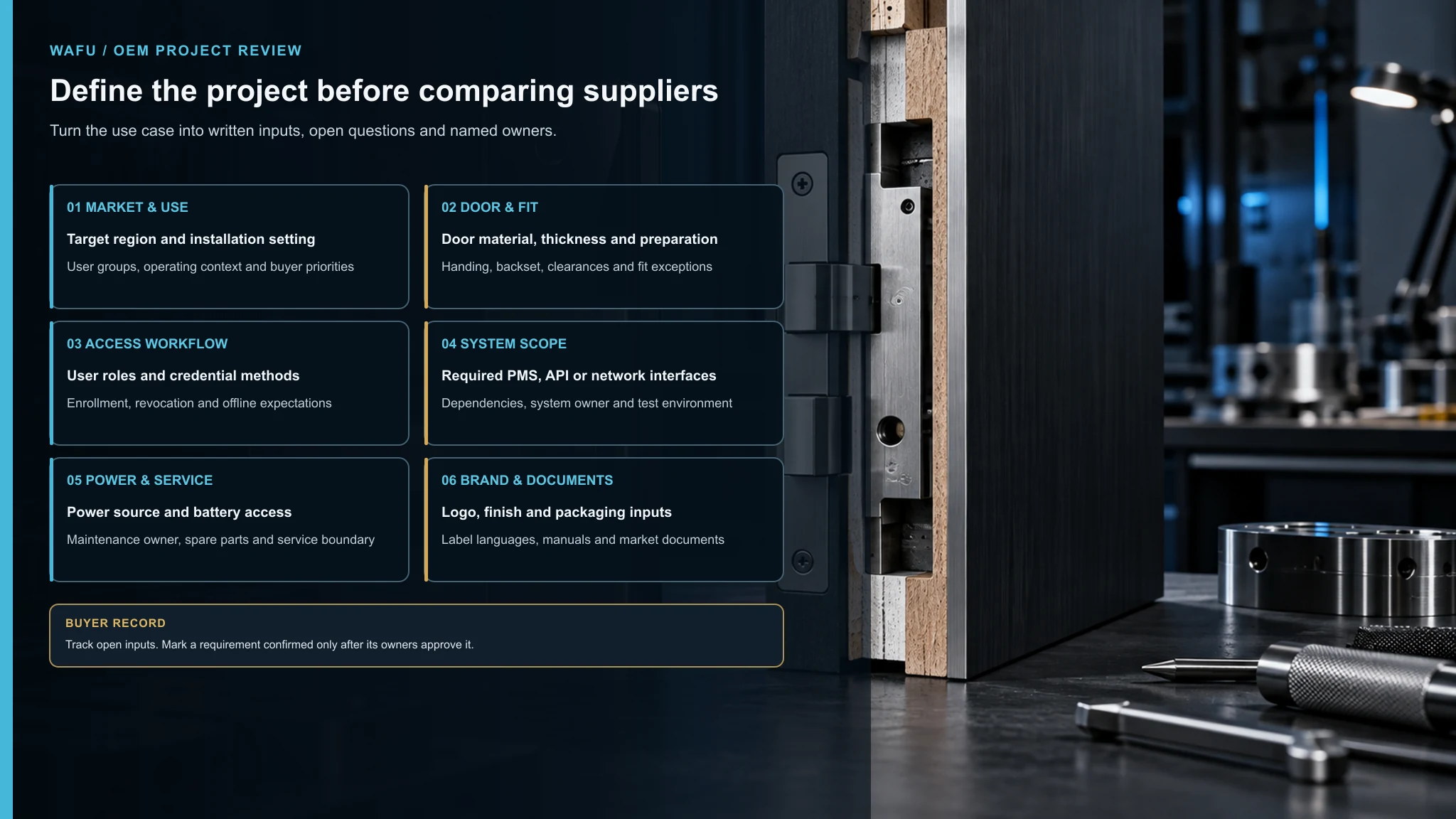
1. Start with the project, not the product catalog
Before contacting suppliers, write down the conditions the lock must meet. A clear project brief helps suppliers respond to the same requirements and makes their proposals easier to compare.
Record:
- Target country or market and intended installation environment
- Door type, material, thickness, handing, and existing hardware
- User groups and access methods required
- Connectivity, software, or access-control integration requirements
- Power source, emergency access expectations, and maintenance constraints
- Appearance, finish, packaging, language, and branding needs
- Required documentation, testing, and approval steps
- Expected launch window and decisions still open
Separate mandatory requirements from preferences. For example, a required integration or a door-compatibility constraint should not be scored the same way as a preferred finish.
Ask each supplier to identify assumptions and unanswered questions. A proposal that lists a product without addressing your installation and operating conditions is not yet a project fit assessment.
2. Define the manufacturing and customization scope
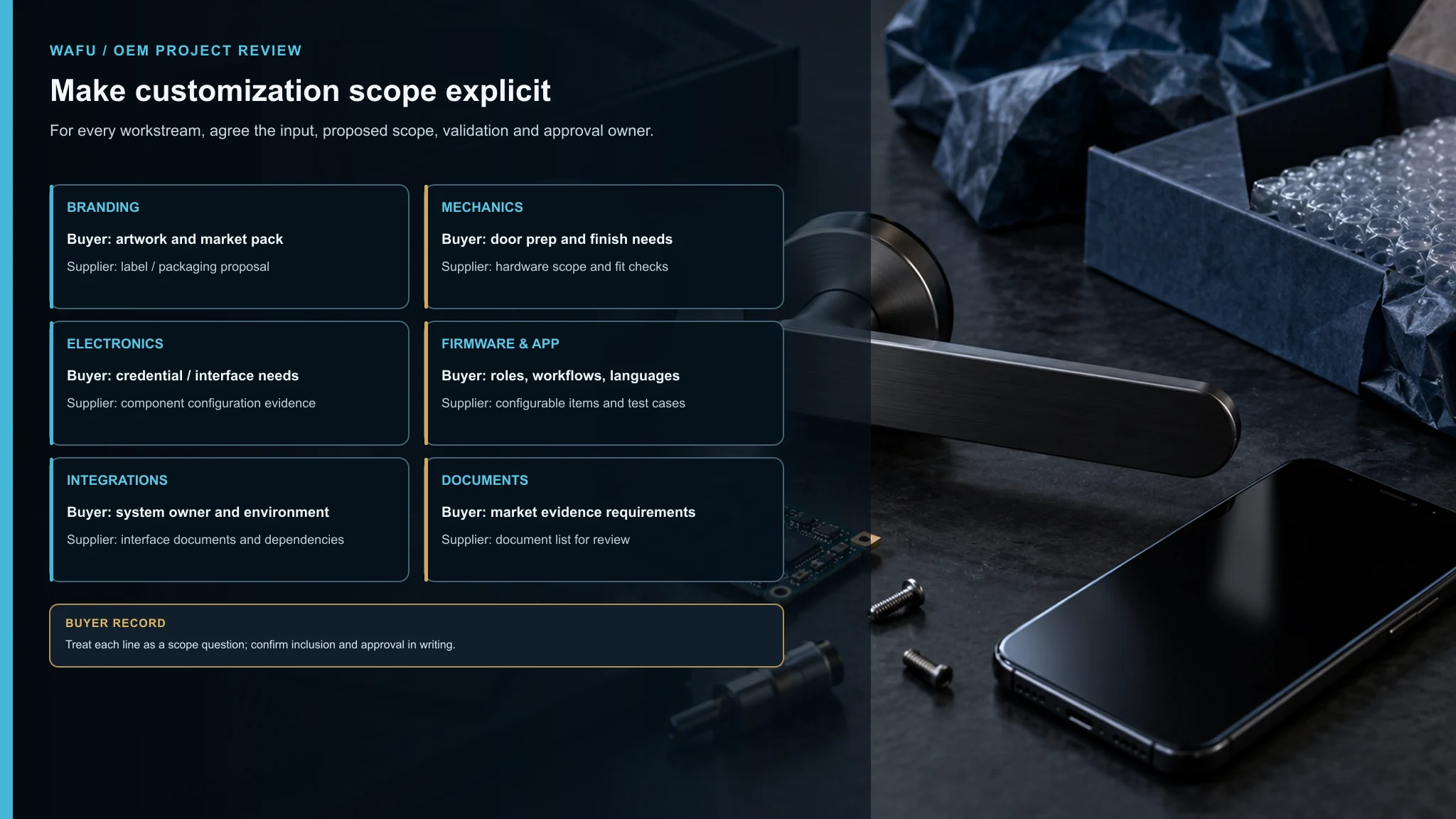
“OEM” and “ODM” can describe different levels of work. The labels alone do not tell you what will change, who owns each design decision, or what must be validated.
Ask the supplier to describe the proposed scope in concrete terms:
- Which existing model or platform is the starting point?
- What can change: branding, packaging, finish, mechanical parts, electronics, firmware, app, or integrations?
- Which changes require new tooling, software work, testing, or documentation?
- Which requirements are outside the supplier’s current scope?
- Who supplies and approves each component, interface, and design input?
- What deliverables will be provided at each project stage?
Request a written scope table showing each requested change, the responsible party, expected output, approval owner, and any dependencies. If a feature is only under consideration, label it as a proposal rather than a confirmed capability.
For broader supplier evidence, see the smart lock supplier evidence matrix. For a deeper comparison of white-label and development work, see the ODM development guide.
3. Evaluate evidence, not just claims
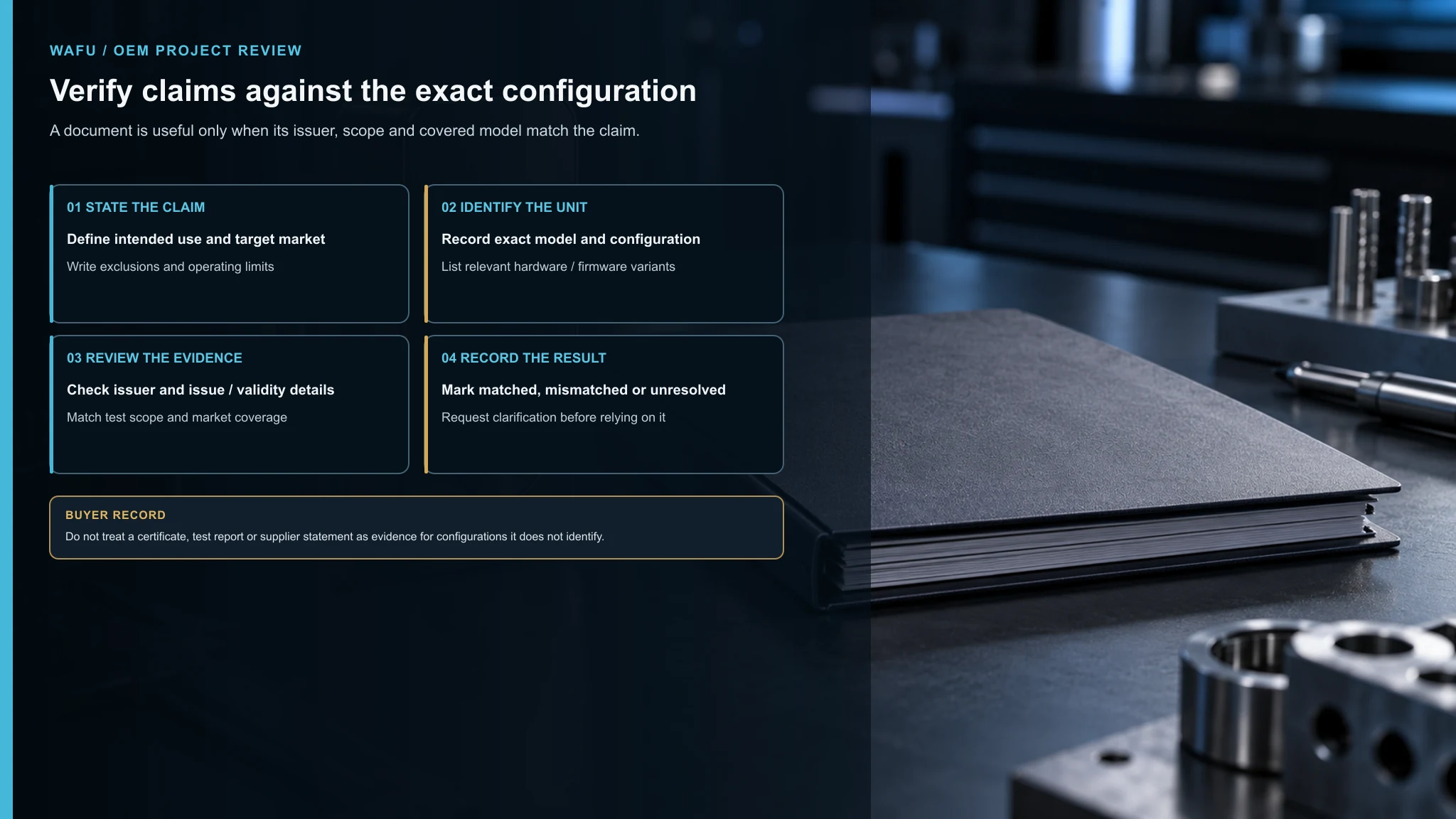
A manufacturer’s website or presentation can help you build an initial shortlist, but project decisions should rely on evidence tied to the product and configuration under review.
For each important claim, ask:
- Which model and configuration does this evidence cover?
- Who issued or prepared the document?
- What test method, version, or date does it identify?
- Does it apply to the complete lock, a component, or a different product?
- Can the supplier explain any difference between the document and your requested configuration?
Useful evidence may include product specifications, drawings, bills of materials or controlled component lists, quality procedures, test reports, process records, and sample build information. The appropriate set depends on your product, market, and project scope.
A document with a familiar logo or standard name is not automatically proof that your selected configuration is covered. Record the document title, issuer, date, model scope, and any unresolved questions in your evaluation notes.
For on-site technical and production evaluation, see the factory evaluation guide.
4. Validate samples against written requirements
A sample should be evaluated against agreed criteria, not only judged by whether it powers on or looks acceptable. Before testing, create a sample acceptance sheet that identifies the exact configuration, test conditions, pass criteria, and who signs off.
Depending on the project, sample checks may cover:
- Fit with the intended door, frame, and hardware
- Installation steps, clearances, and access for maintenance
- Locking and unlocking behavior under expected operating conditions
- User flows, access permissions, and any required integrations
- Power behavior and the agreed low-power or emergency procedures
- Finish, labeling, packaging, and included accessories
- Required records, instructions, or market documents
Keep a record of the sample’s model, hardware and software versions, test setup, results, defects, and agreed corrective actions. If the supplier changes the sample after feedback, identify what changed and repeat the checks affected by that change.
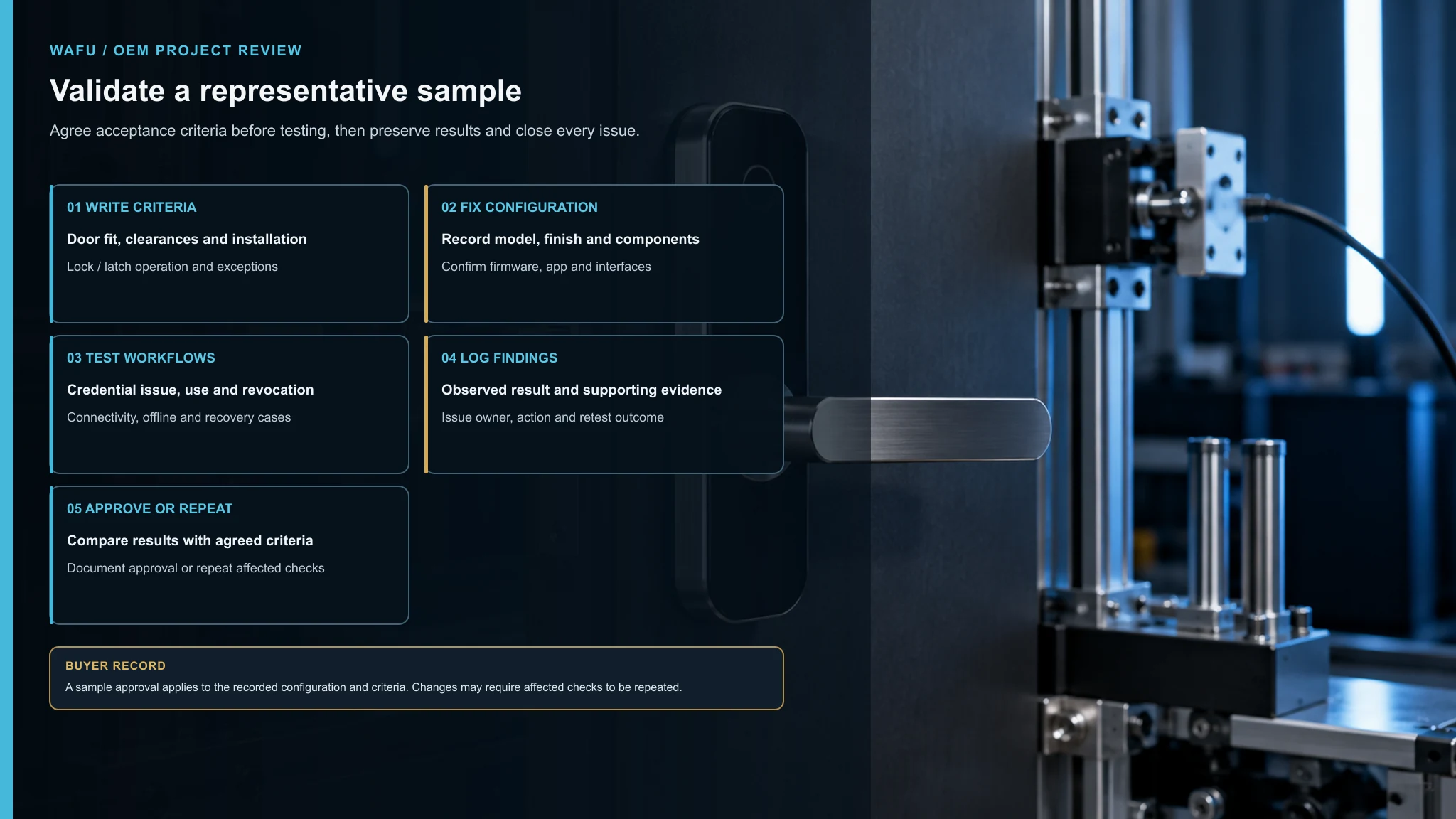
A sample approval should state what it approves. It should not be treated as automatic approval of a later production configuration unless the versions and acceptance terms match.
5. Confirm certification and market documentation
Certification requirements depend on the destination market, product design, radio or power configuration, and intended use. Ask the supplier for documents relevant to the specific model and configuration, then confirm with your importer, test laboratory, or compliance adviser what your project requires.
Clarify:
- Which market requirements have been considered
- Which reports or certificates are available for the proposed configuration
- Whether the documents cover the complete product or selected components
- Whether branding, enclosure, radio module, power supply, or firmware changes affect applicability
- Who is responsible for testing, filings, technical files, labels, and updates
- Which approvals must be completed before shipment or sale
Build a document register with the required item, responsible party, status, target date, and approval evidence. Avoid relying on a broad statement such as “certified” without checking the document’s scope and applicability.
6. Make MOQ, pricing, and lead time comparable
Commercial offers are difficult to compare when they assume different configurations, quantities, or delivery terms. Ask shortlisted suppliers to quote against the same written request.
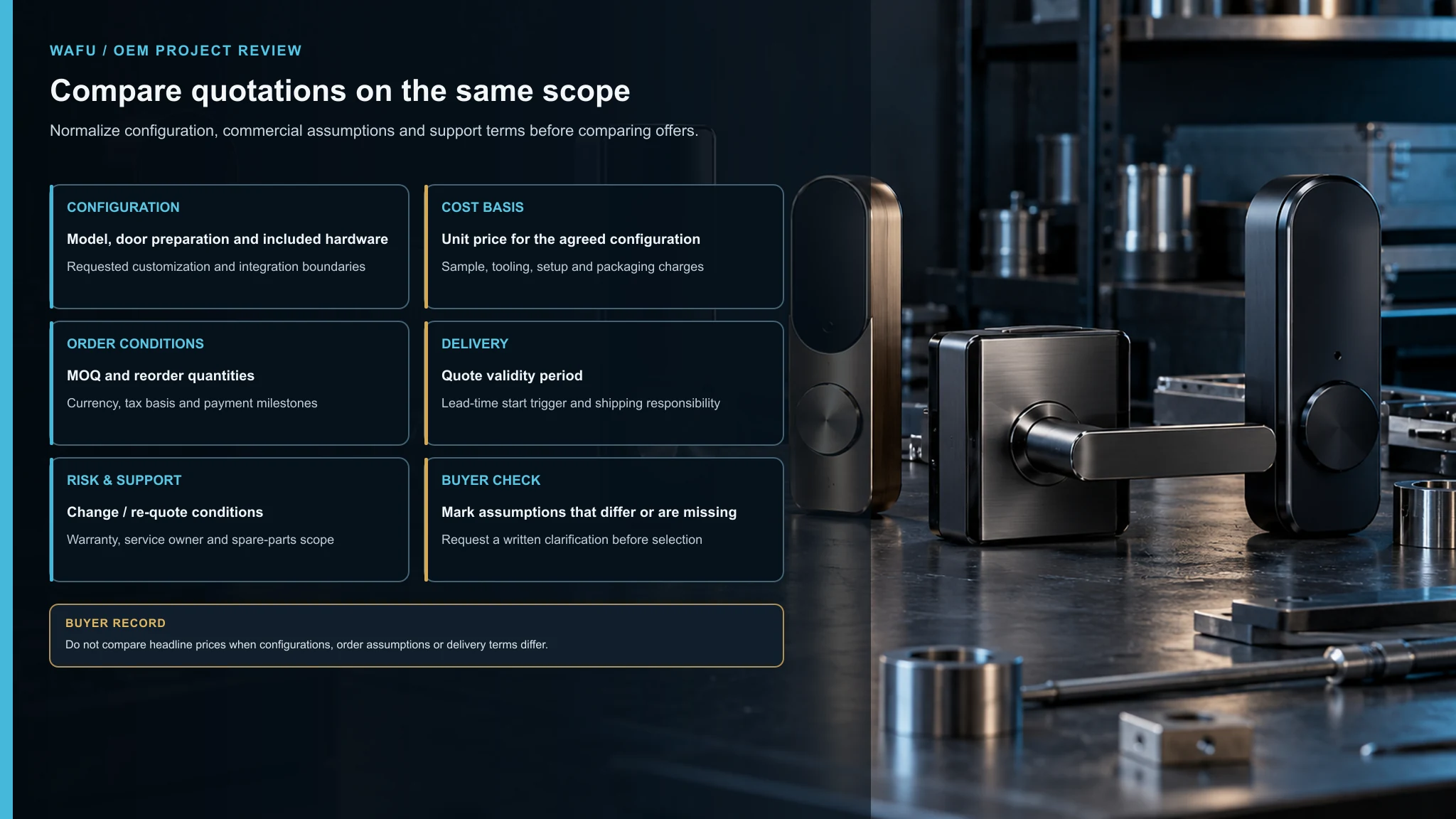
Request a breakdown that identifies:
- Product configuration and included accessories
- Unit price basis, currency, and applicable order quantity
- MOQ by model, finish, packaging, or customization
- Sample and development charges, if any
- Tooling or one-time charges, if any
- Packaging, labeling, and shipping assumptions
- Quotation validity and payment terms
- Lead-time assumptions and the event that starts the schedule
Ask how changes in configuration, document approval, sample approval, or component availability affect the quoted schedule. Treat all MOQ and lead-time values as project-specific commitments to confirm in writing; do not infer them from a catalog or an unrelated order.
7. Agree on quality and engineering change control
A quality discussion should cover how the agreed product will be kept consistent from sample approval through production. Ask the supplier to explain the controls that apply to your project and which records you can review.
Align on:
- The approved specification and sample reference
- Incoming, in-process, and final inspection responsibilities
- Defect definitions, acceptance criteria, and corrective-action process
- Lot identification and traceability records
- How nonconforming products are contained and reported
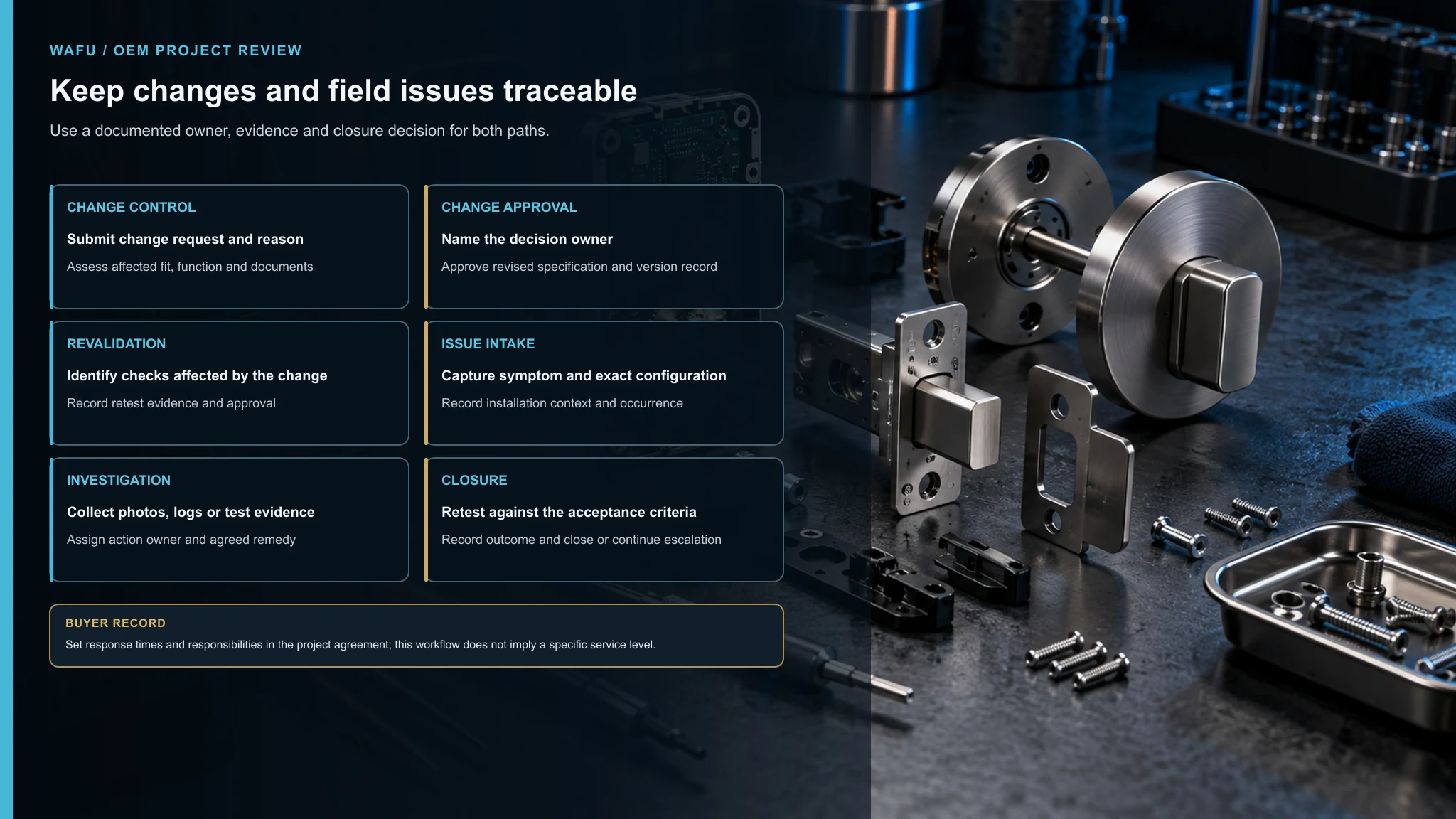
- The process for requesting, reviewing, approving, and documenting changes
Changes to components, firmware, tooling, manufacturing location, or test methods can affect fit, behavior, documentation, or market requirements. Agree that proposed changes will be assessed for impact and approved by designated owners before implementation.
The supply-chain guide provides a deeper framework for reviewing production and quality-control evidence.
8. Define after-sales and product support
Support expectations should be agreed before an issue occurs. Clarify the service process for the product and market you are planning, including the limits of what the supplier will support.
Discuss:
- The contact path for technical and quality issues
- Information needed to investigate a field report
- How the supplier classifies and escalates issues
- Spare parts, repair, replacement, or other agreed remedies
- Software or firmware maintenance responsibilities, where applicable
- Warranty scope, duration, exclusions, and claim process
- How long product records and configuration history are retained
Put responsibilities and response expectations into the project agreement or support documents. Do not assume that support for one model, region, or customer relationship will automatically apply to another.
9. Smart lock OEM buyer checklist
Before selecting a supplier, confirm that you can answer the following:
- Have we documented the target market, door conditions, users, integrations, and operating requirements?
- Are mandatory requirements separated from preferences and open questions?
- Is the OEM/ODM scope specific about changes, deliverables, ownership, and approvals?
- Can each important supplier claim be tied to a model, configuration, and relevant evidence?
- Do we have written sample criteria and a record of the approved sample configuration?
- Have the required market documents and responsible parties been identified?
- Are MOQ, pricing, and lead time quoted against the same scope and assumptions?
- Is there a documented process for inspections, defects, corrective actions, and changes?
- Are after-sales responsibilities, warranty terms, and escalation paths clear?
- Do we know what remains unverified and who must resolve it before ordering?
If several answers are still unknown, keep them on an open-issues list with an owner and due date. Use that list to guide the next supplier discussion rather than treating an incomplete proposal as a final offer.
10. Request an OEM project checklist
A structured checklist can help your team align its requirements before comparing suppliers. To discuss a smart lock OEM project, share the target market, door or installation context, required functions, customization scope, and any documents or samples already available.
Request an OEM project checklist
Request an OEM project checklist or discuss your requirements with the WAFU team. Project scope and technical or commercial details should be confirmed for the specific model and market.
For a broader sourcing overview, see the B2B smart lock OEM sourcing white paper.


